
 +38(068) 325-62-09
 +38(095) 127-41-92
 +38(093) 651-05-48
 (044)251-04-68, (044)251-05-00
 Hammock cords
Showing all 5 resultsSorted by popularity
-

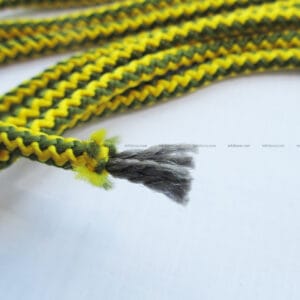
Cord hammock 5 mm polyester with polypropylene filler static braided
324.00грн. Select options This product has multiple variants. The options may be chosen on the product page -
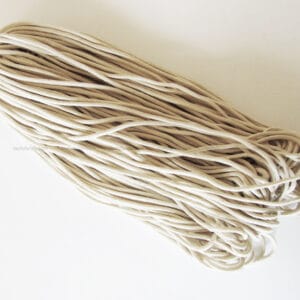
Cotton cord (xb) 3-10 mm strict twisted for macrame
Price range: 174.00грн. through 1,090.00грн. Select options This product has multiple variants. The options may be chosen on the product page -
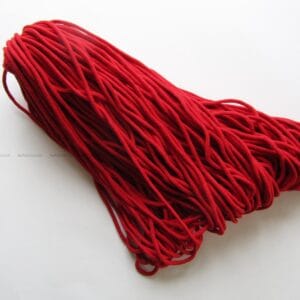
Cord cotton (h.b.) braided red 5 mm
372.00грн. Add to basket -
Cord made of cotton for knitting braided strict 4 – 10 mm
Price range: 204.00грн. through 876.00грн. Select options This product has multiple variants. The options may be chosen on the product page -
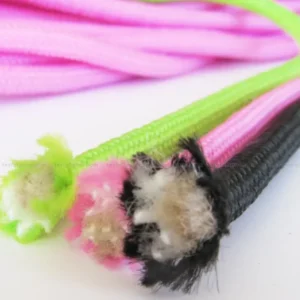
Cord with filler from 3 to 10 mm for stretching awnings, tents, children’s corners and playgrounds, dog leashes, household polypropylene
Price range: 174.00грн. through 1,476.00грн. Select options This product has multiple variants. The options may be chosen on the product page

Our customers often ask what kind of cord is suitable for weaving a hammock?
There can be no one answer, as it all depends on the type of hammock you are going to make and the technique of making it.
Hammock (from the English hammock) – a hanging bed, brought by the British from sea voyages, was used by many peoples.
The manufacturing technology of a hammock is simple and quite affordable for independent home production. There are many techniques for making hammocks that are freely available on the Internet.

TYPES OF HAMMOKS
There are two types of hammocks: woven cord and fabric hammocks.
1. Wicker hammock
A wicker hammock looks like a small basketball net: large cells between two thick rope guides.
Such a hammock is woven from a thick (7-8 mm) rope. Usually recommend cotton rope (cotton, cotton).
2. Wicker macrame hammock
A macramé-style wicker hammock has a finer mesh or wicker pattern. Guides can also be woven.
A macramé-style wicker hammock can be woven from one cord (thicker, about 7-8 mm) or from two cords (thin, about 4-5 mm).
3. Fabric hammock
A fabric hammock is made of one or two guides (thick rope), on which a strong fabric (for example, a tarpaulin) is stretched 120-150 cm wide.
From both ends, the fabric is collected (knotted) so that it takes the form of a cocoon (like a candy wrapper) and hung on supports.
FORM OF CORD FOR HAMMOCK: ROUND OR FLAT
Round cords are traditionally used for braiding or knitting, but flat cords (without a core) are also quite strong and hold knots well.
Therefore, the shape of a hammock cord is a matter of taste and design.
MATERIAL OF CORDS FOR HAMMOK
Since the hammock is designed for people, it is natural that it is better to use natural materials, such as cotton.
The cotton cord is eco-friendly, breathable, soft to the body and holds knots well.
But the cotton cord has disadvantages – it is short-lived, it can shed, it will last for a while if the hammock hangs outside all summer.
Cotton cord will work well for a home hammock that is used in the house.
More “hardy” – synthetic cords, for example, polyester, polypropylene, capron (nylon).
Polyester cords are cheaper than cotton cords, but are just as soft and easy to knit. Polyester cords are popular for weaving (knitting) carpets.
Weather resistant polyester cords.
Polyester cord is good for outdoor home hammock, for family members.
Polypropylene cords are slightly stiffer than cotton and polyester cords and have a smooth surface.
They are slightly more expensive than polyester. Hammocks made of polypropylene cords can be used where an increased load on a hammock is expected: a public beach, a recreation center, a sanatorium.
Nylon cords are the strongest and toughest. However, nylon cords of large diameters may not hold knots well.
For hammocks, it is better to use nylon cords of small diameters (3-5 mm), better twisted (twisted, they are softer) than braided.
A nylon cord hammock will be strong, withstand rain, frost and direct sun.
Good for public places and sports facilities.

-
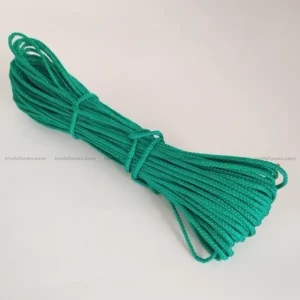 Linen twine cord polypropylene 3 mm 20 meters168.00грн.
 -
Cotton braided tape (100% cotton) 6–8 mm, white, naturalPrice range: 96.00грн. through 102.00грн.
-
Braided Polypropylene Rope with Core (Heavy-Duty) 8–18 mmPrice range: 1,350.00грн. through 5,700.00грн.
-
Decorative twisted furniture cord (twisted) 7 - 8 mmPrice range: 936.00грн. through 1,014.00грн.
-
Twisted nylon cord 2-3-4 mmPrice range: 144.00грн. through 234.00грн.

 🕘 Пн–Чт 9–18 | 🕔 Пт 9–17 | 🚫 Сб–Нд
 +38 (068) 325-62-09
 +38 (095) 127-41-92
 +38 (093) 651-05-48
 (044)251-04-68